Carved Stone Italian Plague Marker d.1654
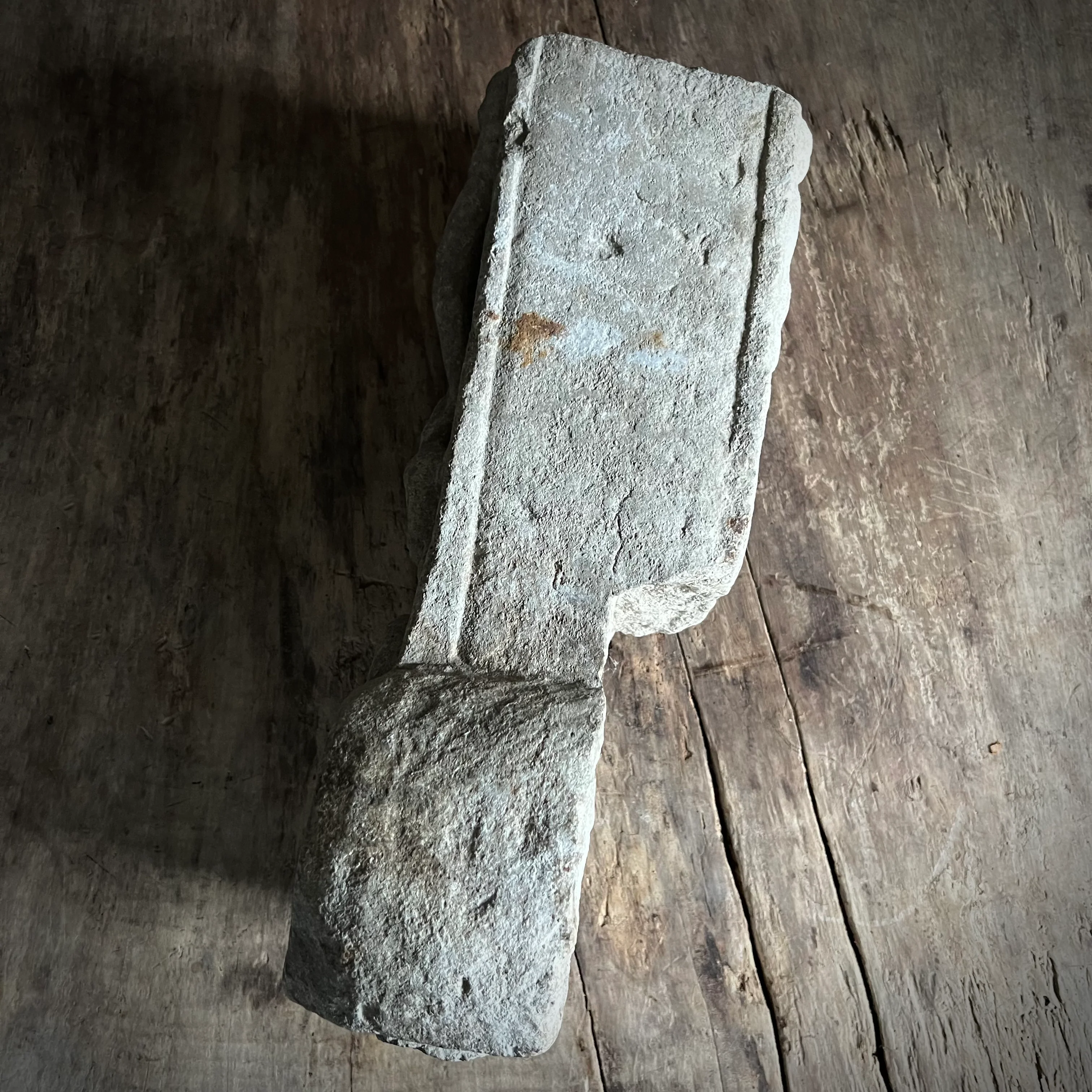
A remarkable example of a 17th Century carved stone Italian Plague Marker, dated 1654.
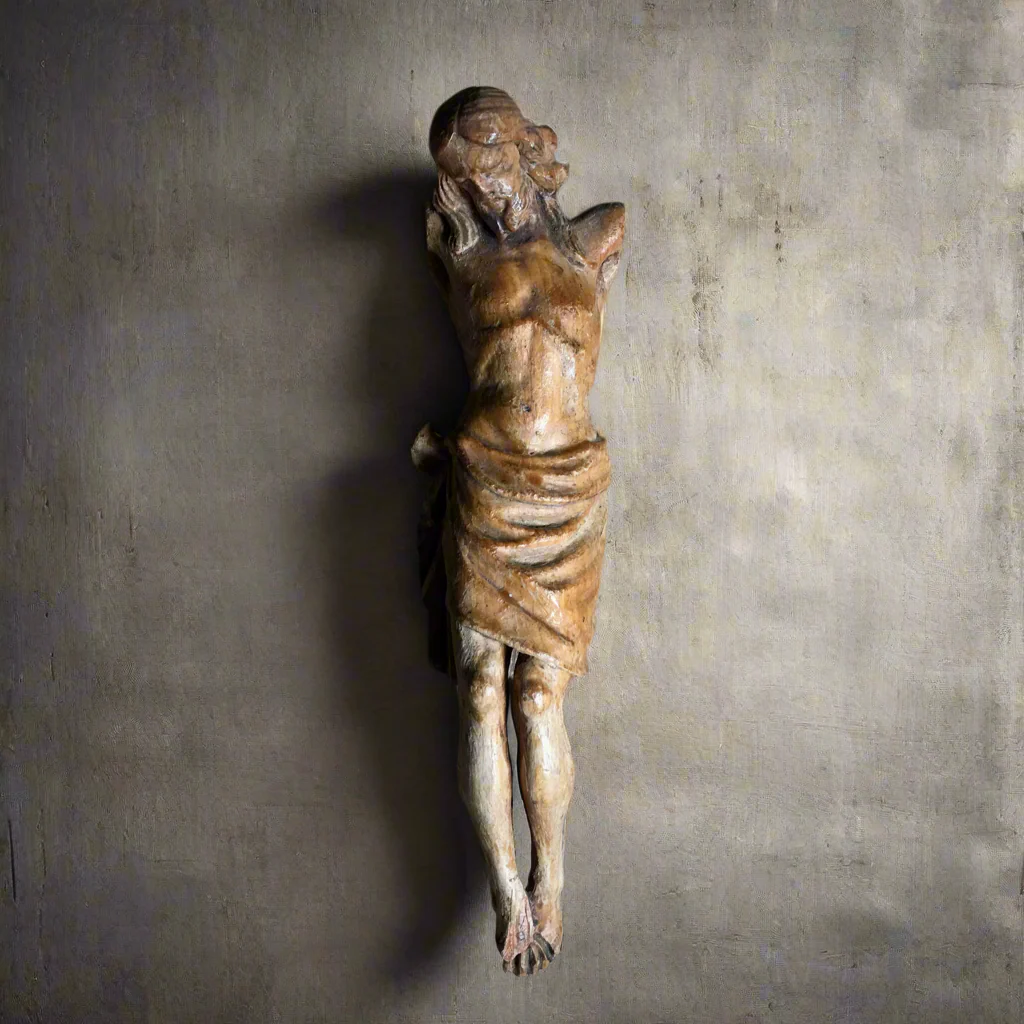
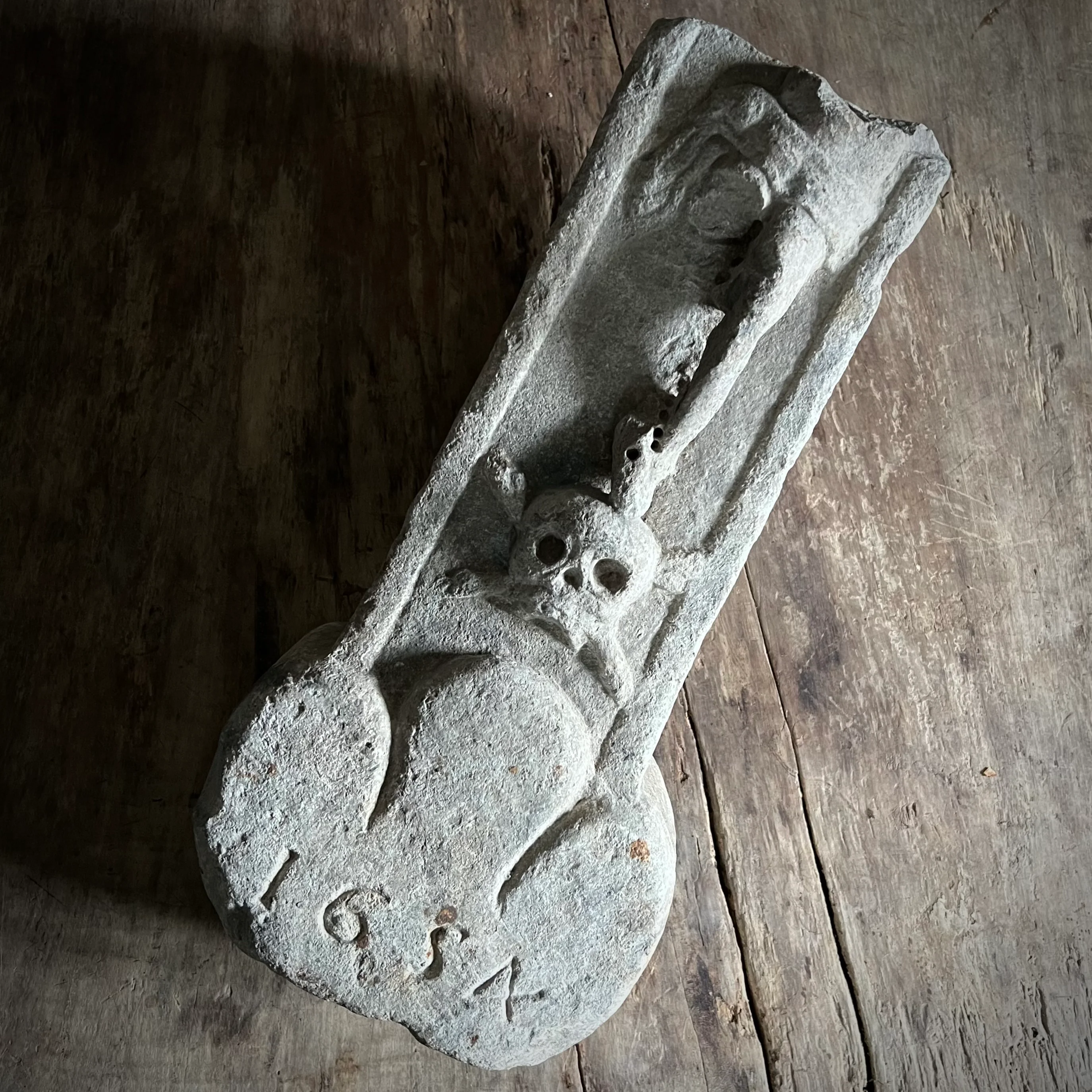
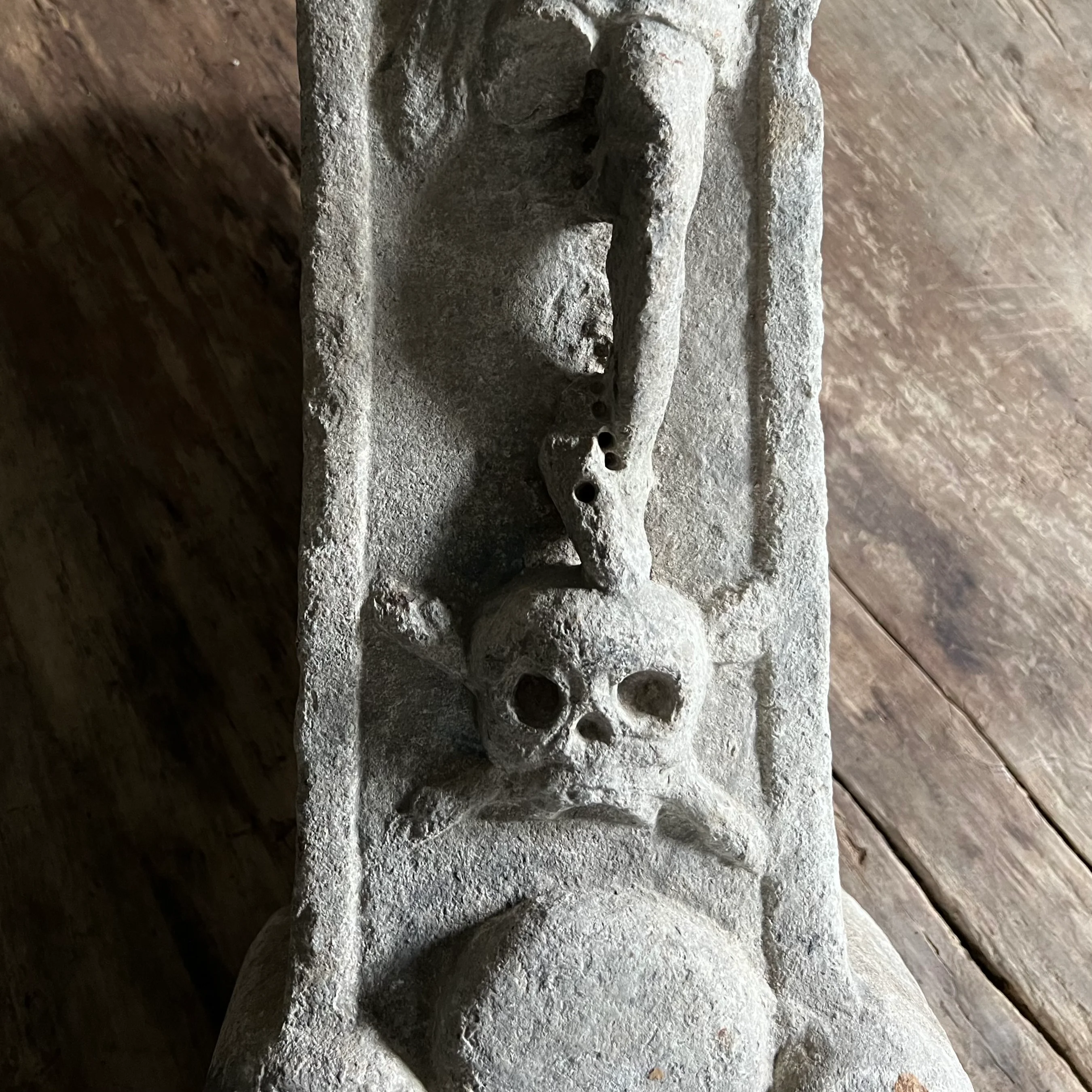
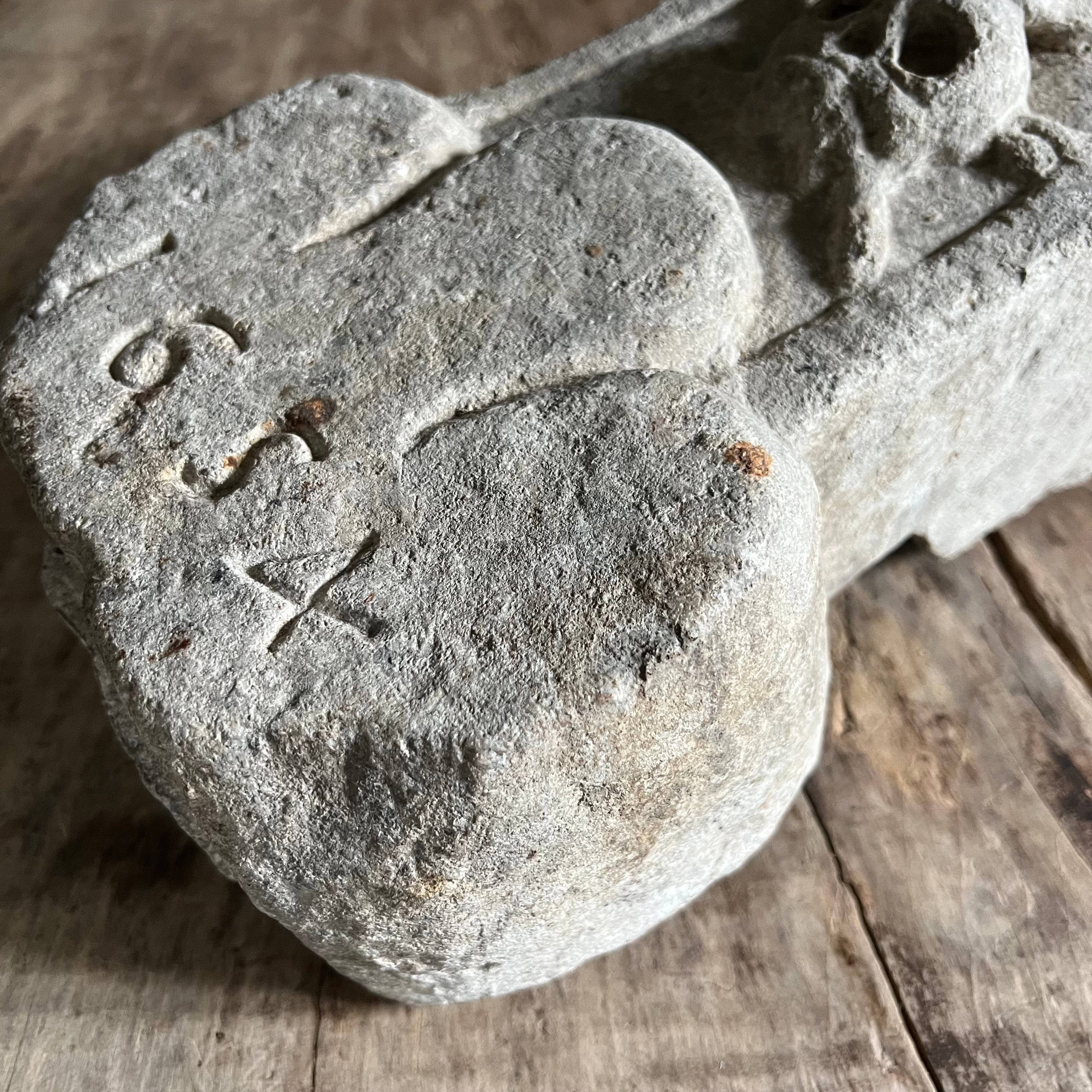
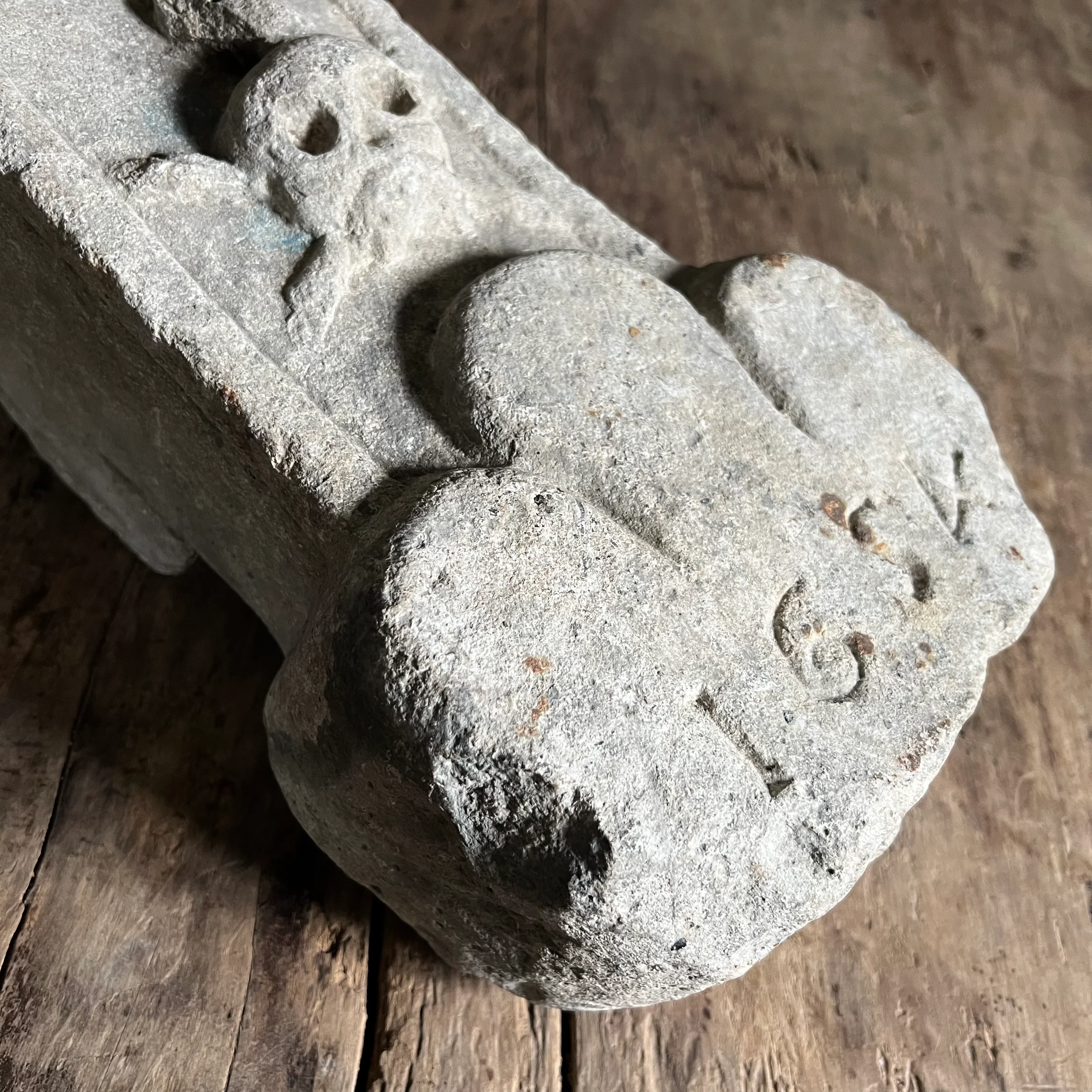
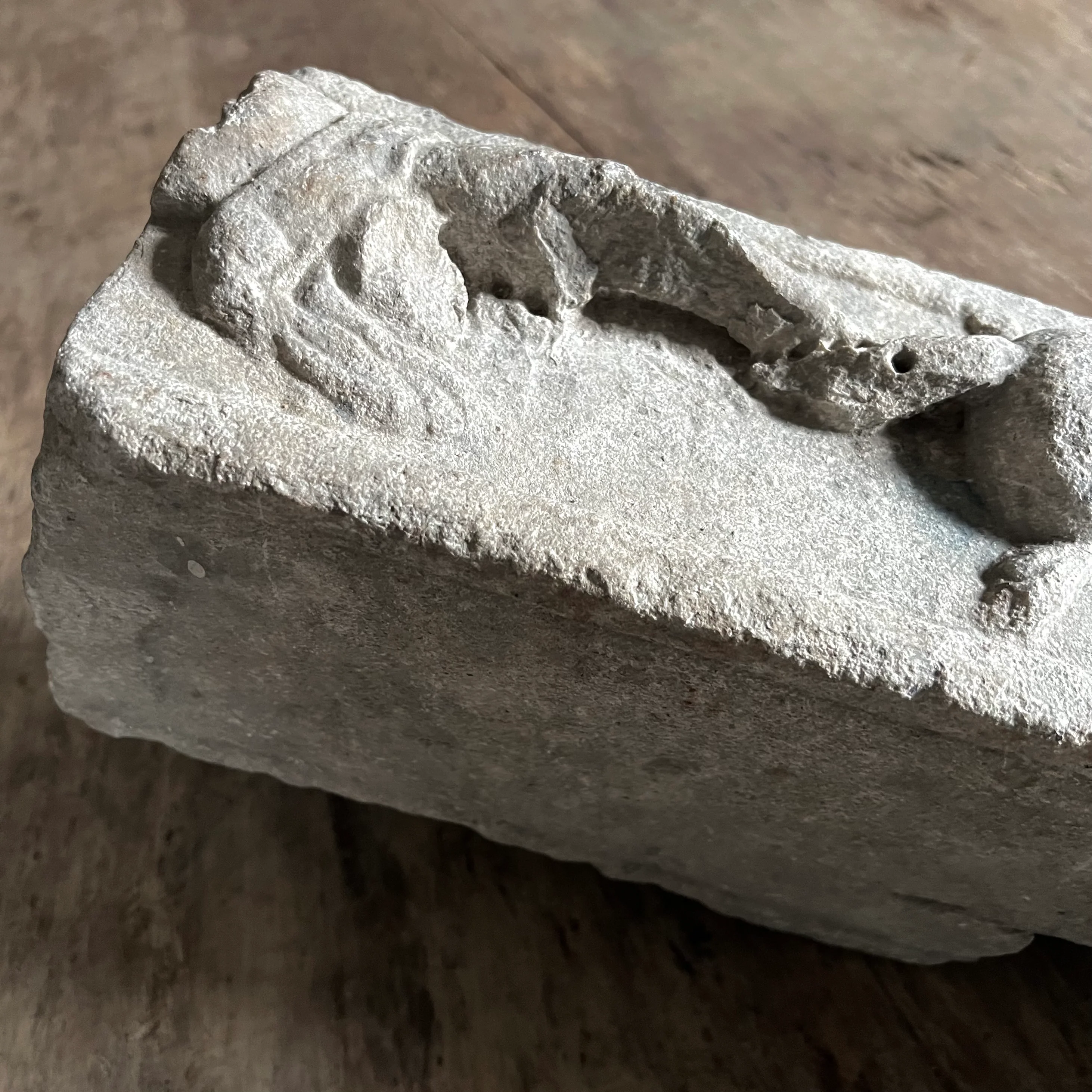
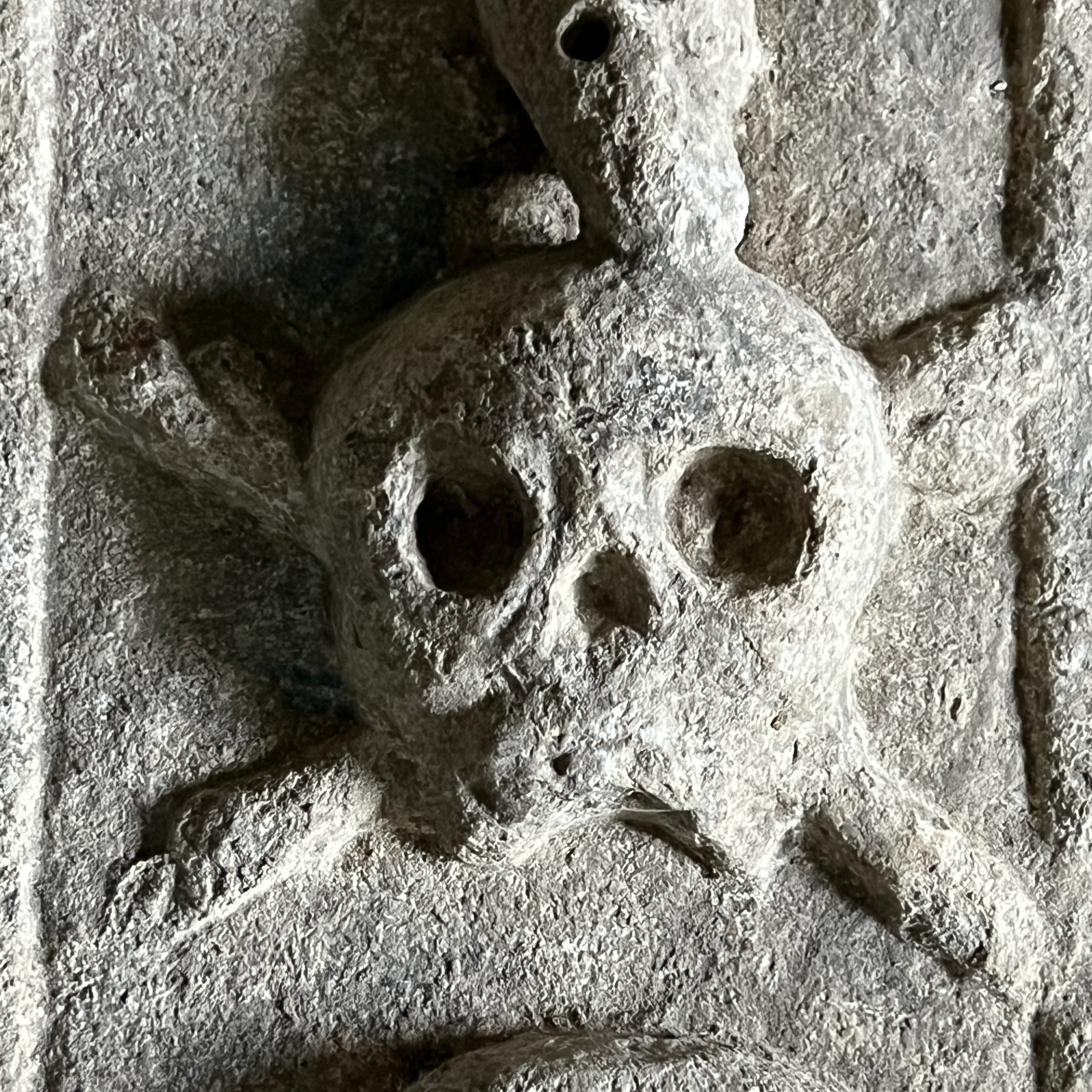
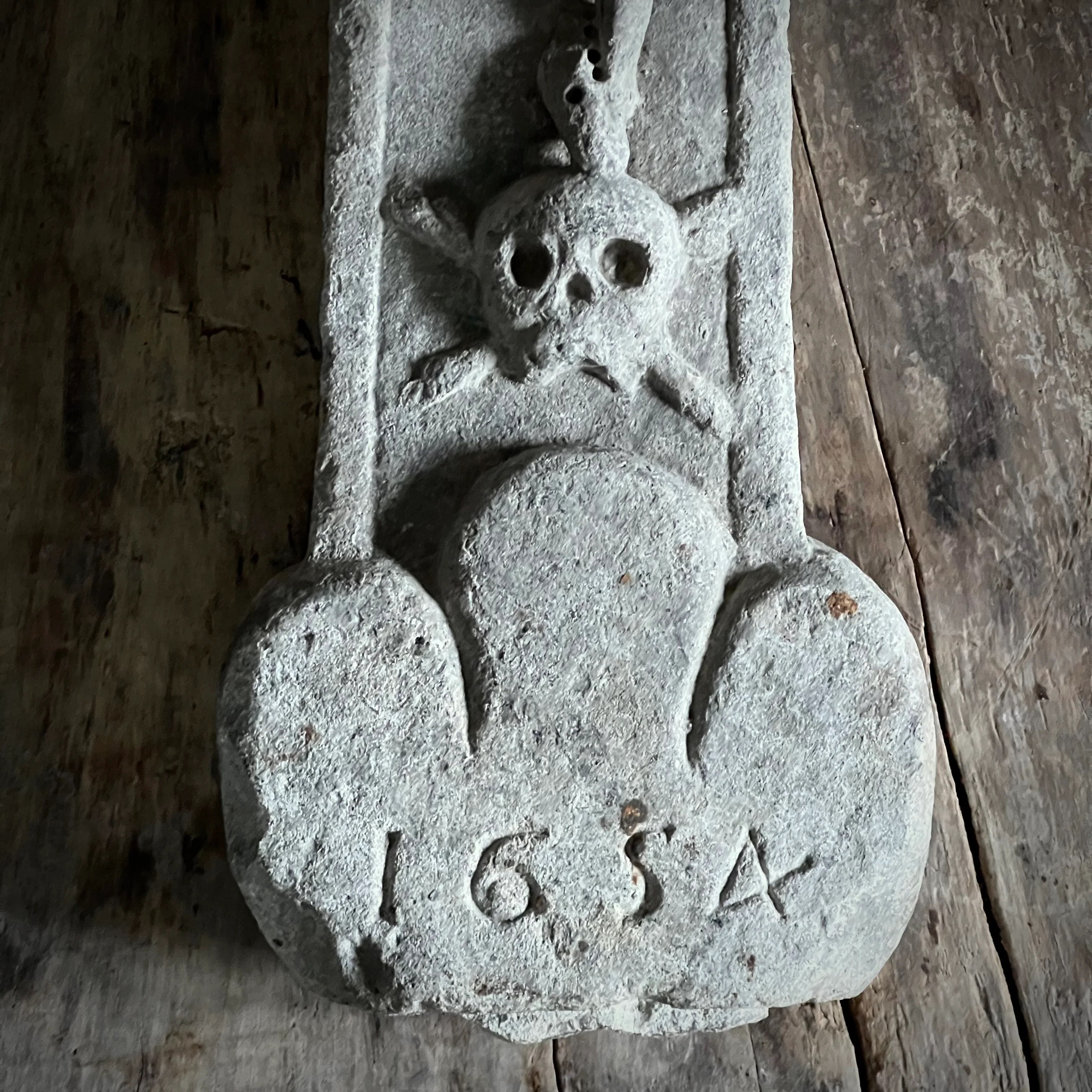
Such markers were often used during periods of widespread disease, particularly the bubonic plague, to commemorate the dead or indicate mass burial sites. On one side of the carving, a detailed depiction of the Crucified Christ is visible, with His outstretched body and a skull and crossbones beneath Him. The skull and crossbones, a common memento mori symbol, remind viewers of the inevitability of death while also referencing Golgotha, the site of Christ’s crucifixion.
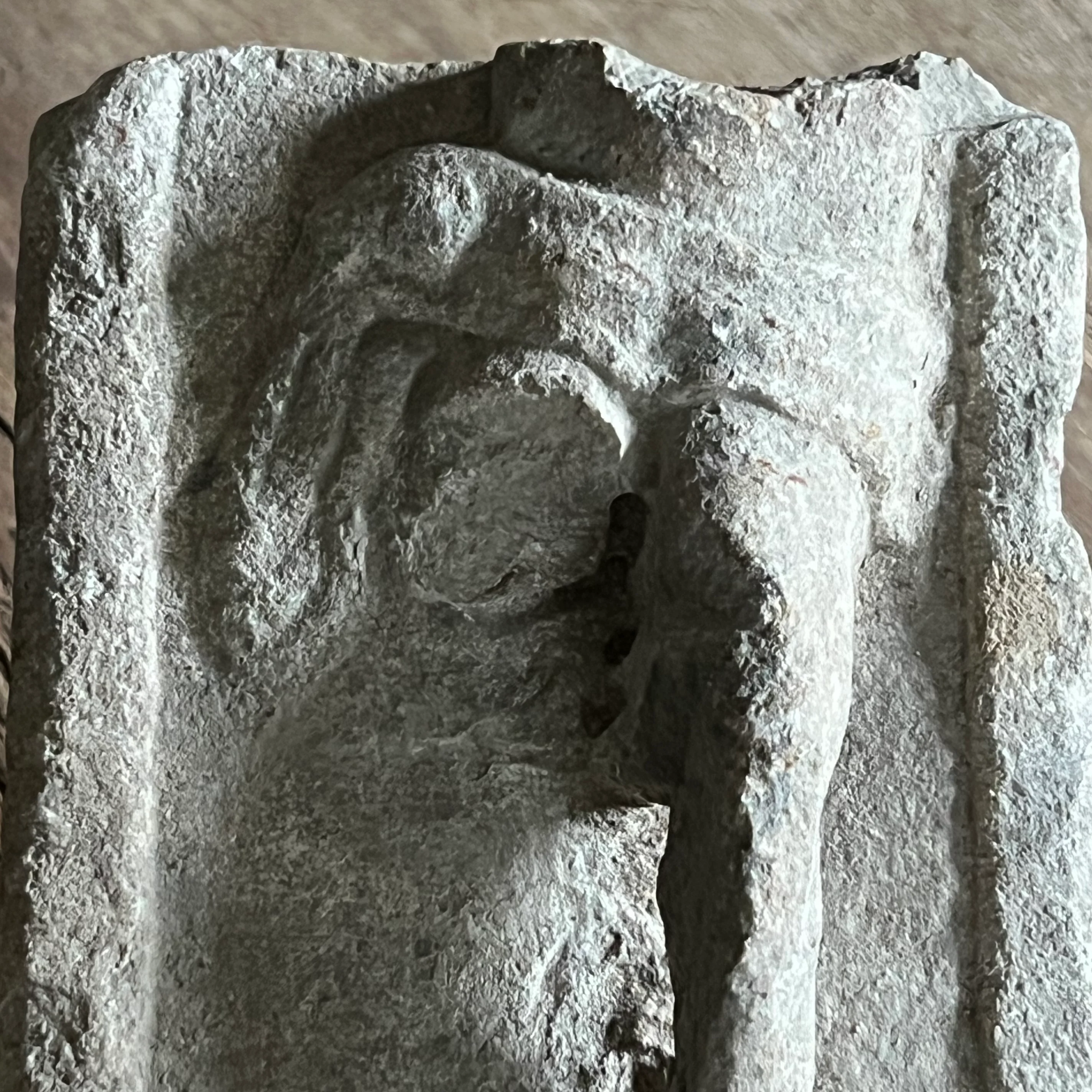
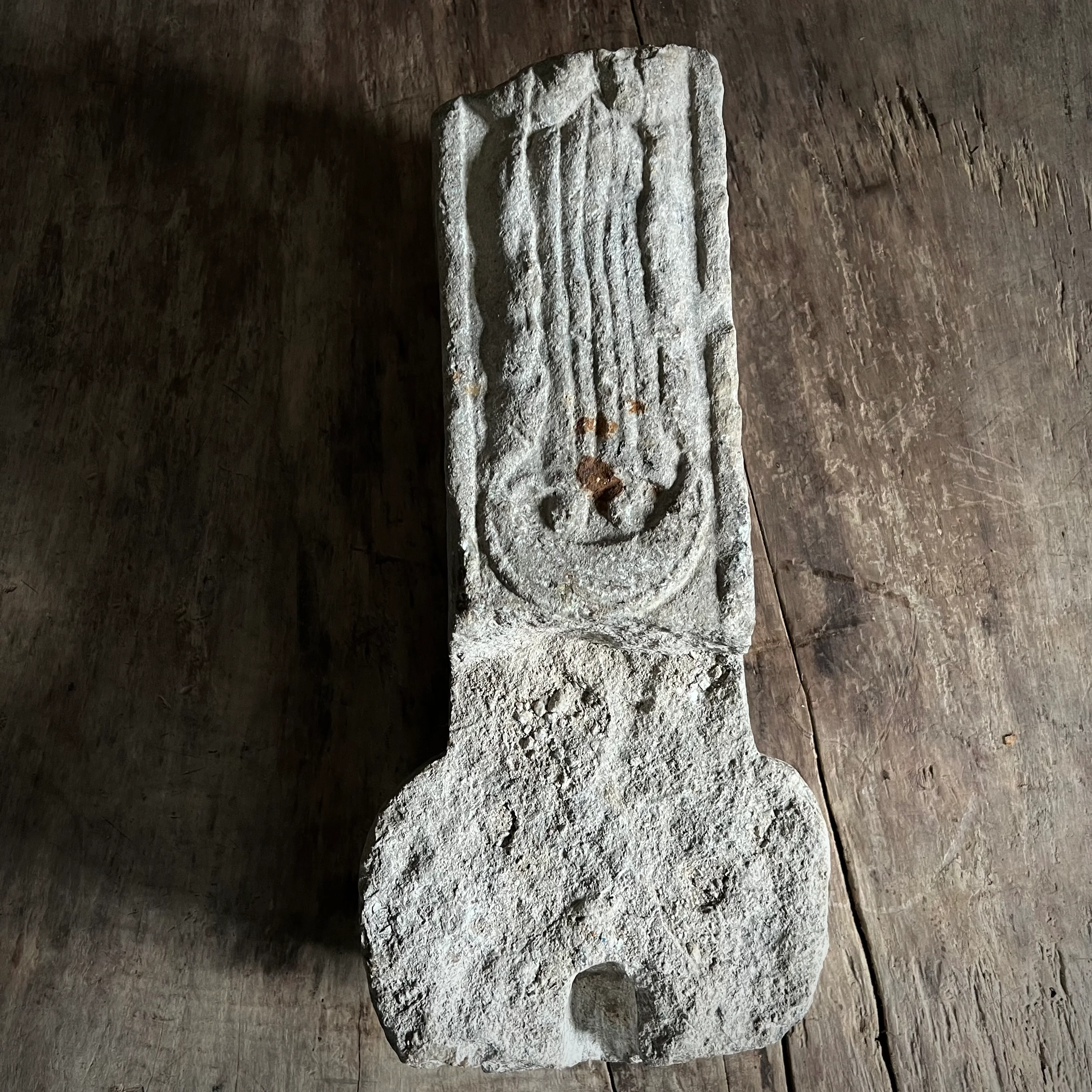
On the reverse side of the fragment, the carving features a crescent moon supporting a robed figure, representing the Virgin Mary. This depiction likely connects to the traditional Christian image of the Virgin of the Apocalypse, based on the passage from the Book of Revelation that describes a woman "clothed with the sun, with the moon under her feet."The crescent moon beneath her feet highlights her divine role in the victory over darkness, offering comfort and protection.
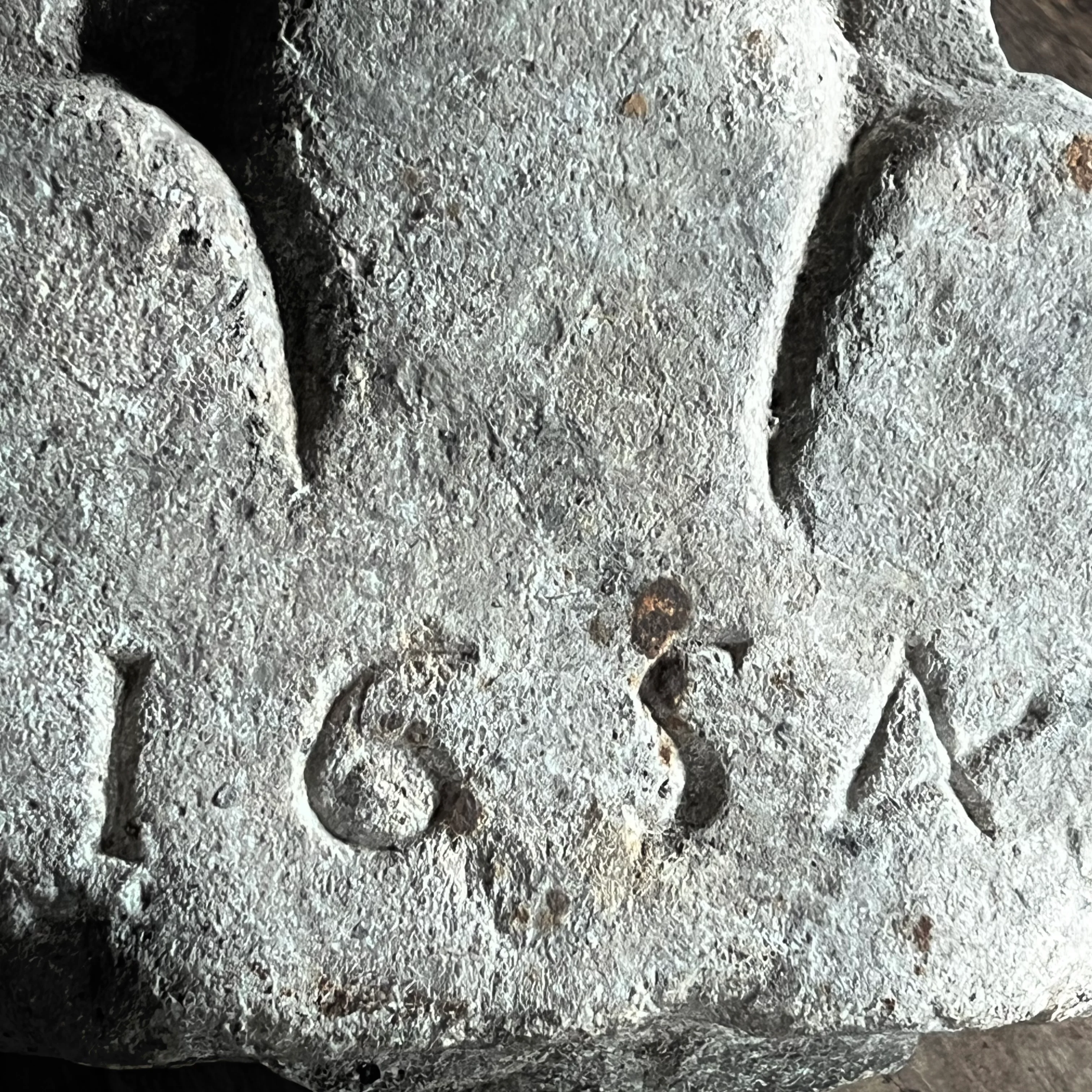
The date of 1654 indicates that this fragment likely commemorates a local outbreak of plague or a religious act of devotion following such an event. It could have been part of a larger monument or cross, placed in a public or religious space to invoke divine protection and serve as a reminder of human mortality.
The rough and somewhat weathered appearance suggests it may have been exposed to the elements, fitting the description of a marker that might have stood at a crossroads, in a churchyard, or at the entrance of a town or village affected by the plague. These locations were typical for such pieces, where they would constantly remind passersby of both death's certainty and Christ's victory over it.
The artefact is local to the region where the 1654 plague occurred, it provides a tangible link to the communal experience of plague in 17th-century Italy, symbolising both faith and the existential reflections that such tragedies provoked.
Original: $5,056.17
-70%$5,056.17
$1,516.85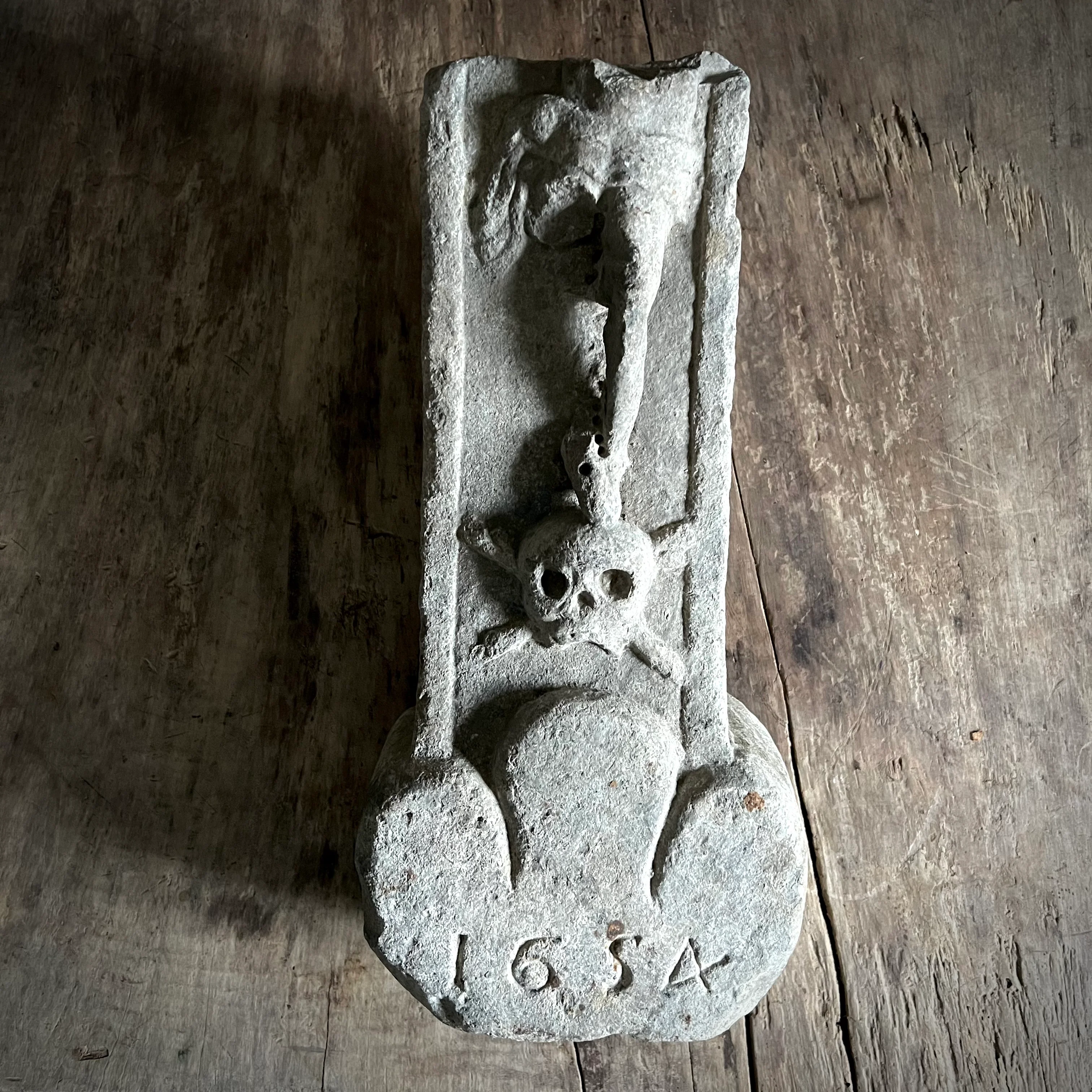











Description
A remarkable example of a 17th Century carved stone Italian Plague Marker, dated 1654.
Such markers were often used during periods of widespread disease, particularly the bubonic plague, to commemorate the dead or indicate mass burial sites. On one side of the carving, a detailed depiction of the Crucified Christ is visible, with His outstretched body and a skull and crossbones beneath Him. The skull and crossbones, a common memento mori symbol, remind viewers of the inevitability of death while also referencing Golgotha, the site of Christ’s crucifixion.
On the reverse side of the fragment, the carving features a crescent moon supporting a robed figure, representing the Virgin Mary. This depiction likely connects to the traditional Christian image of the Virgin of the Apocalypse, based on the passage from the Book of Revelation that describes a woman "clothed with the sun, with the moon under her feet."The crescent moon beneath her feet highlights her divine role in the victory over darkness, offering comfort and protection.
The date of 1654 indicates that this fragment likely commemorates a local outbreak of plague or a religious act of devotion following such an event. It could have been part of a larger monument or cross, placed in a public or religious space to invoke divine protection and serve as a reminder of human mortality.
The rough and somewhat weathered appearance suggests it may have been exposed to the elements, fitting the description of a marker that might have stood at a crossroads, in a churchyard, or at the entrance of a town or village affected by the plague. These locations were typical for such pieces, where they would constantly remind passersby of both death's certainty and Christ's victory over it.
The artefact is local to the region where the 1654 plague occurred, it provides a tangible link to the communal experience of plague in 17th-century Italy, symbolising both faith and the existential reflections that such tragedies provoked.