Huge Spanish Fajalauza Lebrillo Granada Bowl Late 18th/ Early 19th Century
A huge, rare and striking late 18th to Early 19th century Spanish Fajalauza lebrillo from Granada.
The production of such beautiful glazed terracotta ‘Lebrillo’ bowls known as Fajalauza, date back to early 16th Century Granada, and were created particularly in the Albayzín, a district of Granada. These traditional and humble banal forms have become an emblem of the city. Created for domestic use, they are a simple non-noble objects connected to everyday life and were a recognised part of all Granada households, each home owning one or more depending on its’ size.
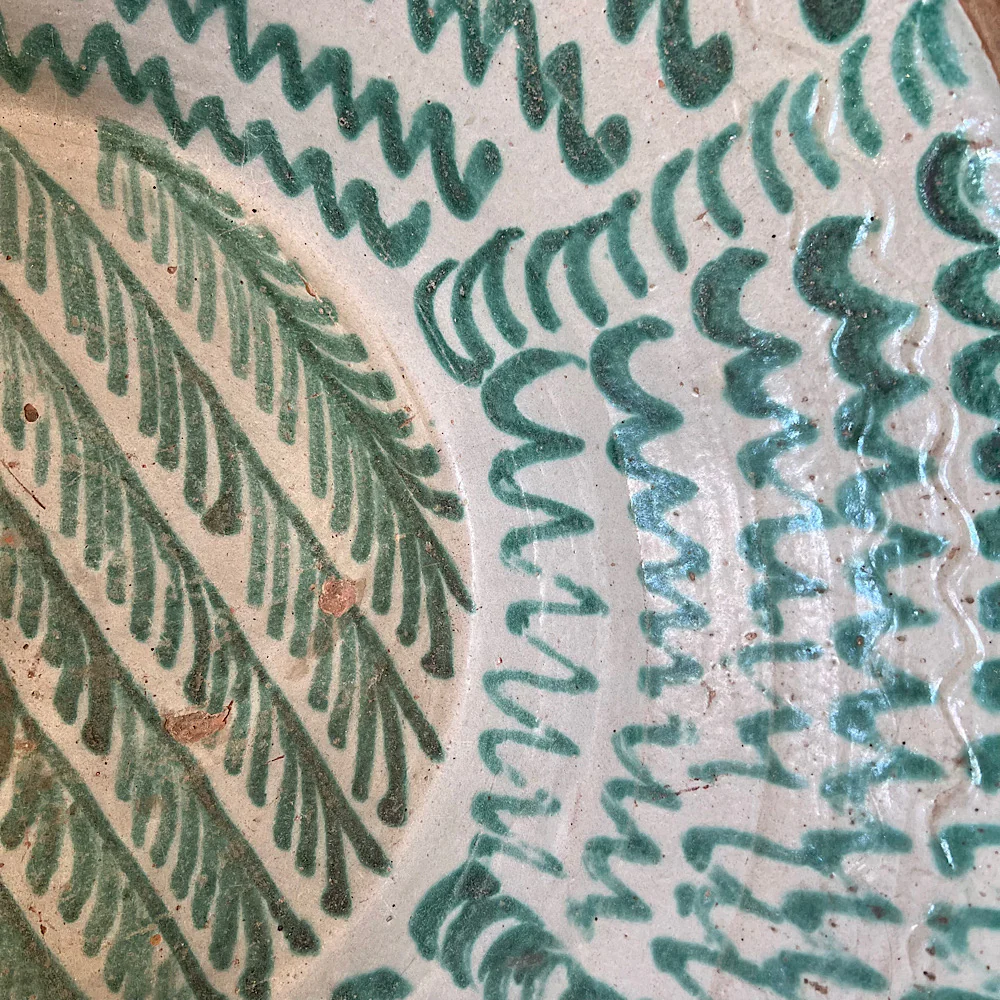
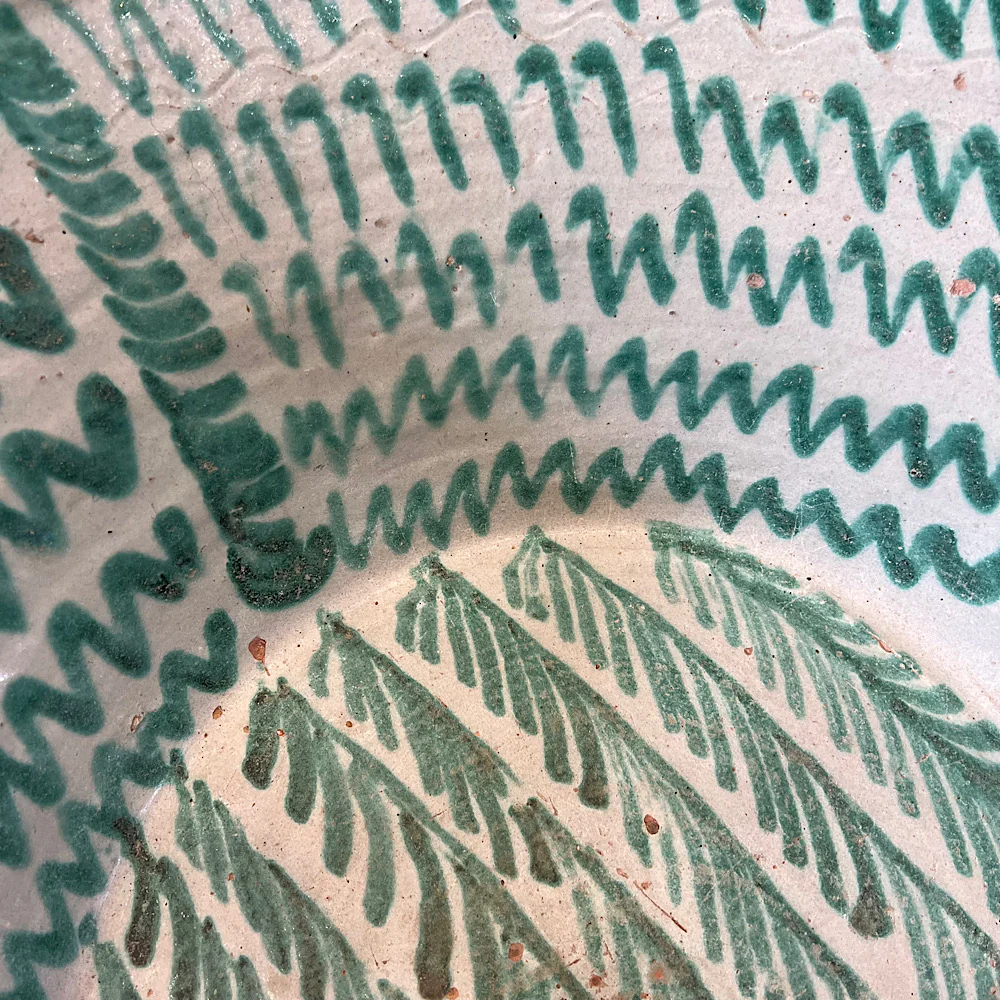
The terracotta is painted in a white tin and lead glaze with oxides of copper and cobalt giving the greenish blue appearance to the decorative patterns. The patterns are simple, of symbolic lilies, branches, birds or pomegranates. This particular piece has a rare central motif of wheat sheaves connecting it to an agricultural family. Featuring with a rolled lip and gently sloping sides, they were traditionally used to cook or marinate food, but even used to wash clothes. Their importance was such to a family, that the ceramics were passed down through generations and so precious that if they were broken then they were of course stapled and repaired, but never thrown away.
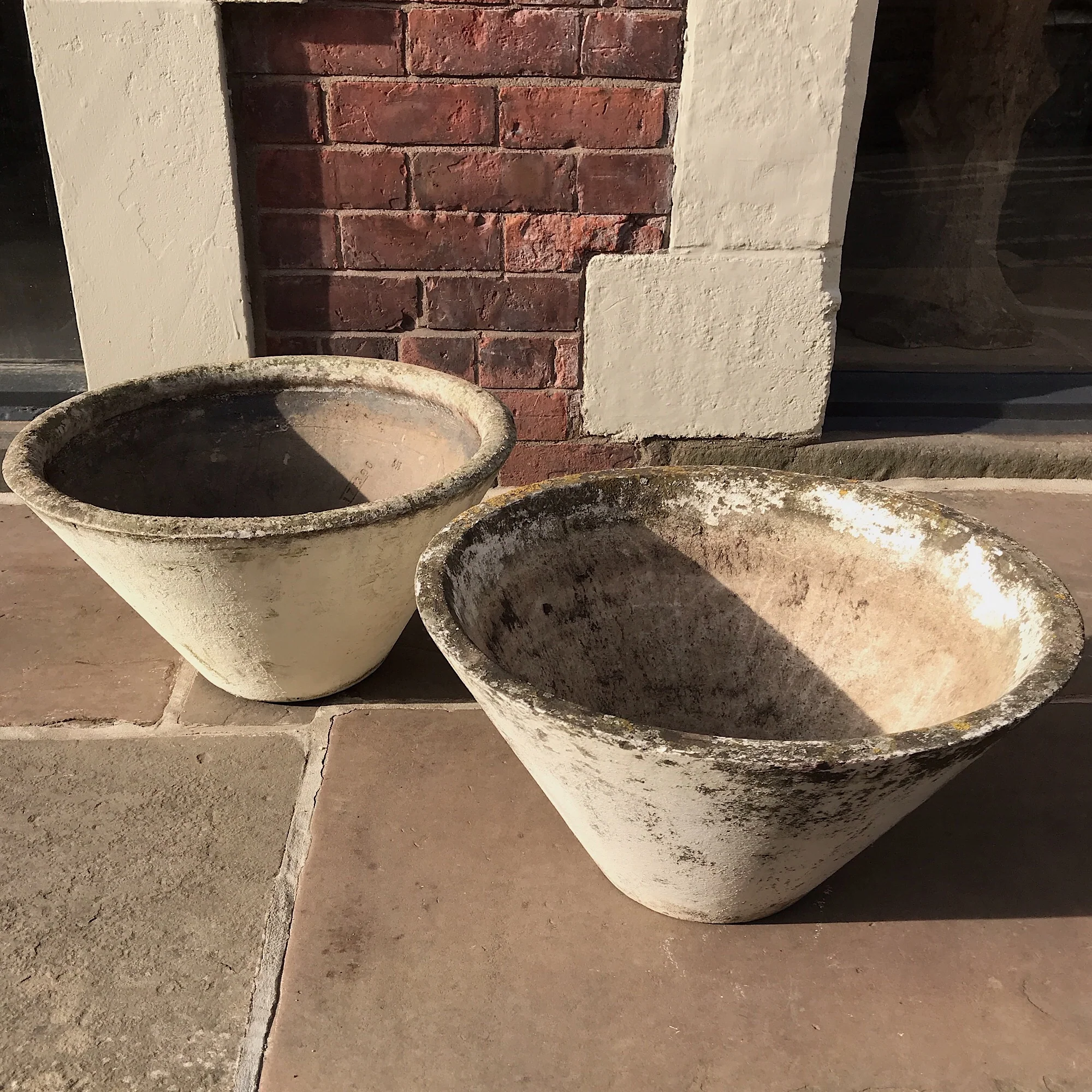
The large Lebrillo fits inside this huge Lebrillo, see final image.




Description
A huge, rare and striking late 18th to Early 19th century Spanish Fajalauza lebrillo from Granada.
The production of such beautiful glazed terracotta ‘Lebrillo’ bowls known as Fajalauza, date back to early 16th Century Granada, and were created particularly in the Albayzín, a district of Granada. These traditional and humble banal forms have become an emblem of the city. Created for domestic use, they are a simple non-noble objects connected to everyday life and were a recognised part of all Granada households, each home owning one or more depending on its’ size.
The terracotta is painted in a white tin and lead glaze with oxides of copper and cobalt giving the greenish blue appearance to the decorative patterns. The patterns are simple, of symbolic lilies, branches, birds or pomegranates. This particular piece has a rare central motif of wheat sheaves connecting it to an agricultural family. Featuring with a rolled lip and gently sloping sides, they were traditionally used to cook or marinate food, but even used to wash clothes. Their importance was such to a family, that the ceramics were passed down through generations and so precious that if they were broken then they were of course stapled and repaired, but never thrown away.
The large Lebrillo fits inside this huge Lebrillo, see final image.