Large Italian Baroque Solomonic Altar Column with Vine and Grape Carving, c.1650-1720
A large and exceptionally carved Baroque Solomonic column dating to the late seventeenth century, or very early eighteenth century - originating from a church altar structure in Northern Italy, circa 1650-1720.
Columns such as this would originally have formed part of a retable — the elaborate architectural framework that rises behind the altar in many Catholic churches. These dramatic structures framed paintings or sculptures of sacred figures, using twisting columns, gilded carving and architectural ornament to create a theatrical focus for the altar.
The column is carved in wood in a powerful spiral wrapped in vines, leaves and clusters of fruit. This imagery carried strong symbolic meaning during the Baroque period. The vine refers to Christ as the “true vine”, while the fruit relates to the Eucharist and the sacramental wine.
The original surface survives beautifully. Traces of water gilding remain across the carving, laid over a deep red bole ground. In Baroque church decoration gold symbolised divine light and heavenly glory, while the red beneath was associated with Christ’s sacrifice and the Passion.
A striking piece of Baroque architectural sculpture.
Later mounted on a turned wooden base.
Original: $8,781.76
-70%$8,781.76
$2,634.53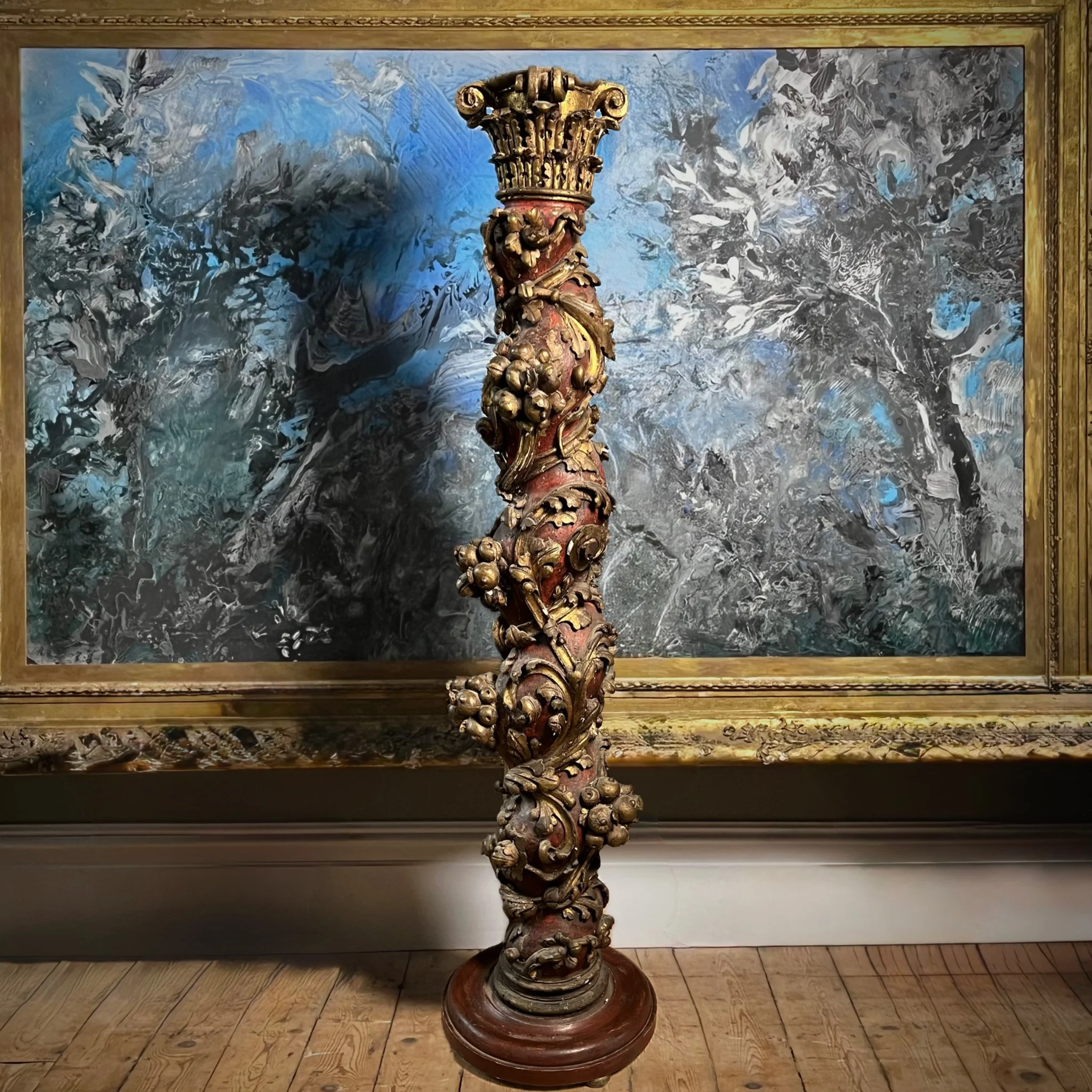











Description
A large and exceptionally carved Baroque Solomonic column dating to the late seventeenth century, or very early eighteenth century - originating from a church altar structure in Northern Italy, circa 1650-1720.
Columns such as this would originally have formed part of a retable — the elaborate architectural framework that rises behind the altar in many Catholic churches. These dramatic structures framed paintings or sculptures of sacred figures, using twisting columns, gilded carving and architectural ornament to create a theatrical focus for the altar.
The column is carved in wood in a powerful spiral wrapped in vines, leaves and clusters of fruit. This imagery carried strong symbolic meaning during the Baroque period. The vine refers to Christ as the “true vine”, while the fruit relates to the Eucharist and the sacramental wine.
The original surface survives beautifully. Traces of water gilding remain across the carving, laid over a deep red bole ground. In Baroque church decoration gold symbolised divine light and heavenly glory, while the red beneath was associated with Christ’s sacrifice and the Passion.
A striking piece of Baroque architectural sculpture.
Later mounted on a turned wooden base.